
Patrick King Mwesigye Founder and Director of Programs at Hope for Refugees International
More than 75 years after the adoption of the Universal Declaration of Human Rights, LGBTQI+ refugees continue to flee criminalization, violence, and state-sanctioned persecution. Canada remains a destination of safety for many. Yet arrival does not automatically translate into belonging.

More than 75 years after the adoption of the Universal Declaration of Human Rights, LGBTQI+ refugees continue to flee criminalization, violence, and state-sanctioned persecution. Canada remains a destination of safety for many. Yet arrival does not automatically translate into belonging.
On February 27, 2026, Hope for Refugees International convened over 100 participants, Pride organizers, queer movement conveners, frontline settlement workers, policymakers, and queer refugees themselves, to confront a difficult but necessary question:
Why do LGBTQI+ refugees still feel unsafe, unseen, and tokenized within LGBTQI+ spaces in Canada?
The answers were not about bad intentions. They were about structure.
The Inclusion Paradox
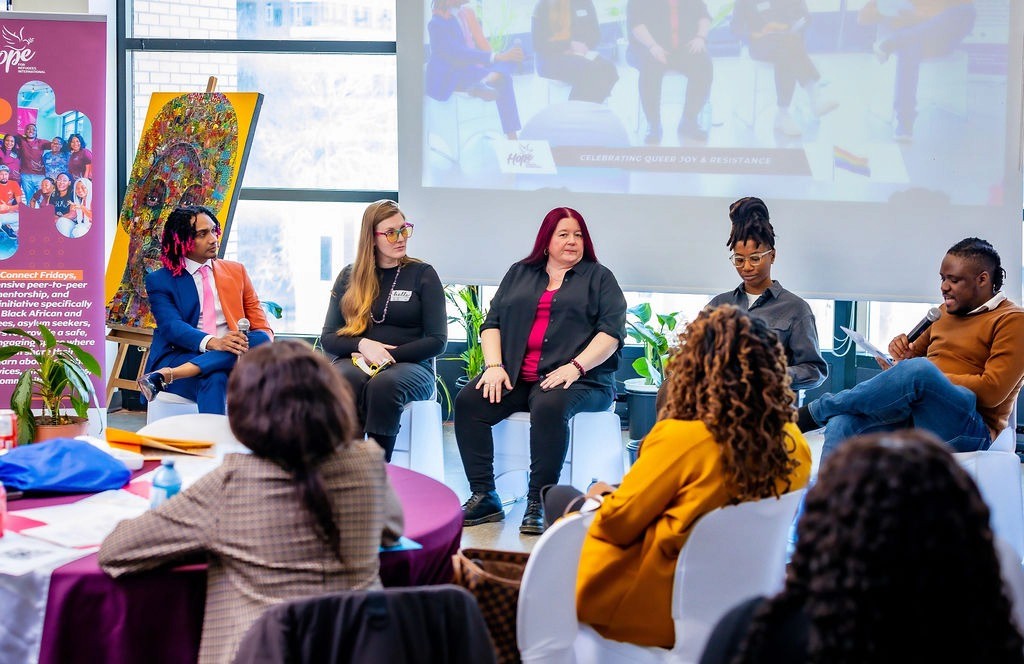
In the image above, panelists and participants engage in dialogue on shared power and leadership inclusion during the “Tokenized or Recognized?” roundtable.
Mainstream Pride movements have made meaningful strides in visibility and rights recognition. However, visibility alone does not equal safety. Nor does representation guarantee power.
Black and racialized LGBTQI+ refugees frequently describe being invited to share their stories of trauma while remaining excluded from governance and decision making tables. They are asked to speak, but not to decide. They are showcased, but not compensated. They are welcomed symbolically, but not structurally.
Recent studies (e.g., Enchanté Network’s Out in the Open report, 2023) have highlighted systemic gaps in how LGBTQI+ organizations support newcomer and refugee communities. Many queer refugees feel excluded from Pride spaces, LGBTQI+ organizing, and policy conversations, often reduced to “survivor stories” or used for tokenistic representation, rather than being recognized for their expertise, leadership, and cultural contributions.
These findings echo what many refugee leaders have known through lived experience: inclusion without shared power is tokenism.
Safety Is Not Automatic
While Pride organizations are committed to diversity, there is currently no nationally shared framework that addresses the layered realities faced by refugee and newcomer communities.
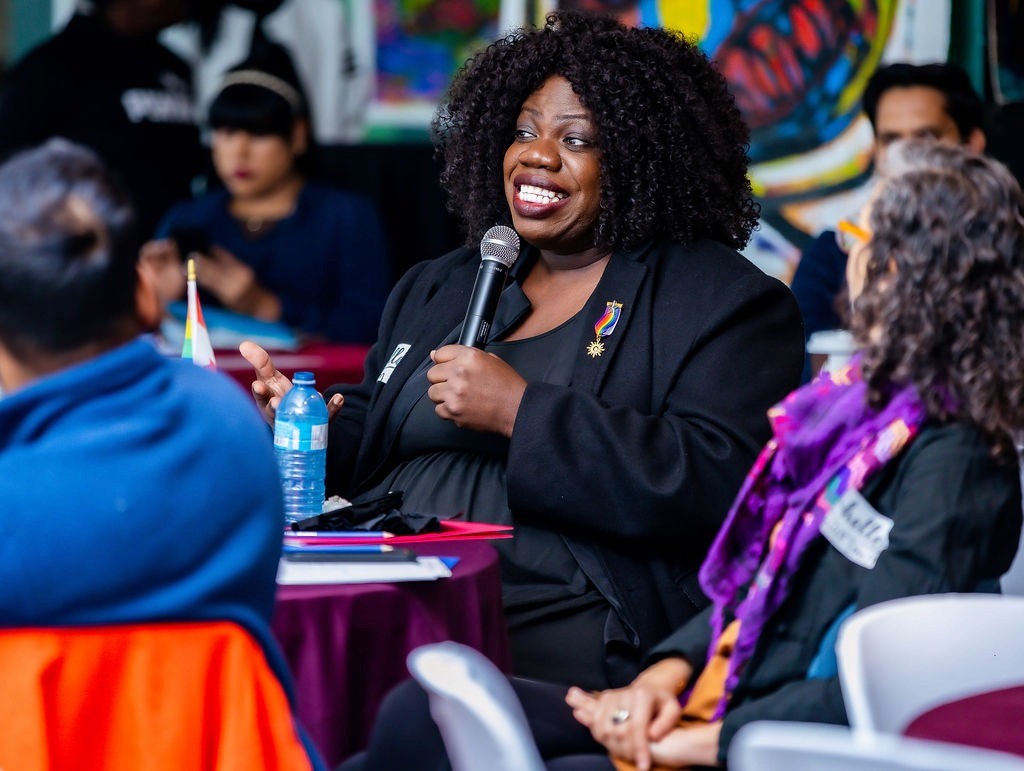
In the image above, participants engage in dialogue on reclaiming belonging in LGBTQI+ movements during the “Pride Beyond Borders” plenary session.
"Pride Beyond Borders: Reclaiming Belonging in LGBTQI+ Movements"
These realities include immigration-related confidentiality risks, digital surveillance and harassment, public outing through photography or media exposure, and the psychological retraumatization that can occur in highly visible public spaces. For Black and racialized refugees, these risks intersect further with anti-Black racism and structural inequities.
Without structured safety planning, participation can unintentionally expose individuals to harm noted, Cooper Andre, the Manager for Communications and Partnerships at Hope for Refugees International.
Goodwill is not enough. Safety must be intentional, proactive, and institutionalized.
From Symbolic Inclusion to Shared Power
Throughout the symposium discussions, one theme surfaced consistently: Pride must move from symbolic inclusion toward shared power.
Speaking at the symposium, Randy Singh, the Director of the You Belong Here Newcomer Program at Uplift Black noted that meaningful participation requires more than invitations to speak. It requires pathways to leadership, paid advisory roles, governance seats, mentorship pipelines, and transparent accountability mechanisms. It requires organizations to examine who controls resources, who sets agendas, and who holds decision-making authority, added Singh.
If refugees are trusted to represent the community publicly, they must also be trusted to shape budgets, strategy, and policy internally.
This shift is not cosmetic. It is structural.
Joy as Political Strategy
Perhaps the most powerful reframing from the gathering was this: joy is not separate from resistance. It is resistance.
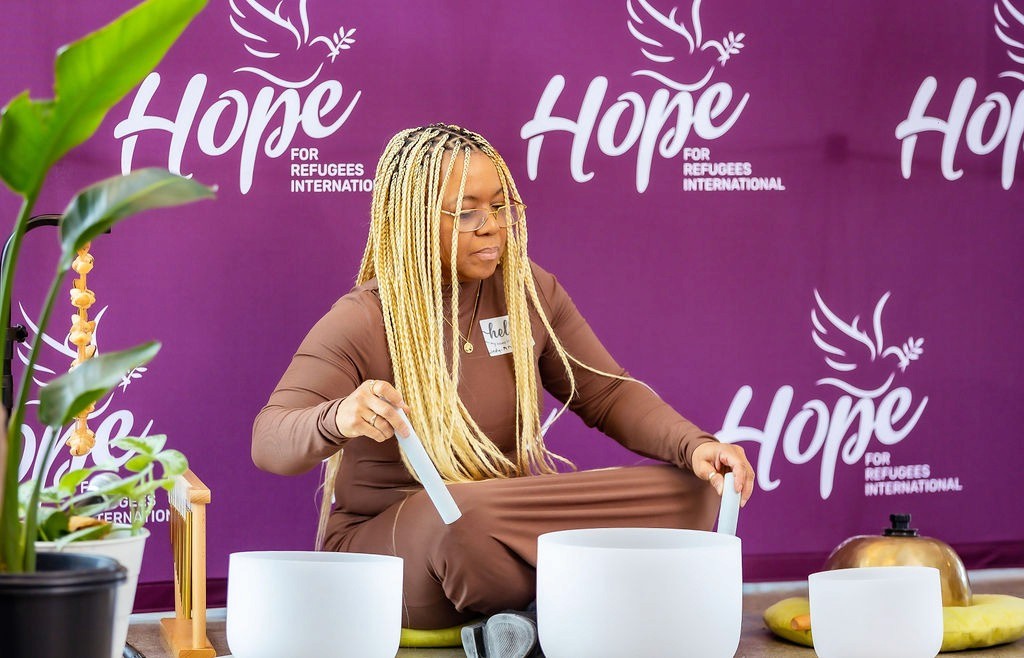
In the image above, Lindy-Ann Barrow from IJIDIDE Holistic Healing Inc, presents the Sound bath and healing session centering joy as resistance
For queer refugees, joy is not a denial of trauma. It is an act of survival and self-determination. It challenges narratives that reduce individuals to victimhood and instead affirms their agency, creativity, and leadership.
When movements center joy alongside justice, they build resilience. When organizations recognize refugees not only as survivors but as strategists, advocates, and innovators, they expand the movement’s capacity for transformation.
A Structural Response
In response to these systemic gaps, Hope for Refugees International is developing Canada’s first National Training Toolkit on Meaningful Participation and Safety of Black and Racialized LGBTQI+ Refugees and Newcomers in Pride and LGBTQI+ Spaces.
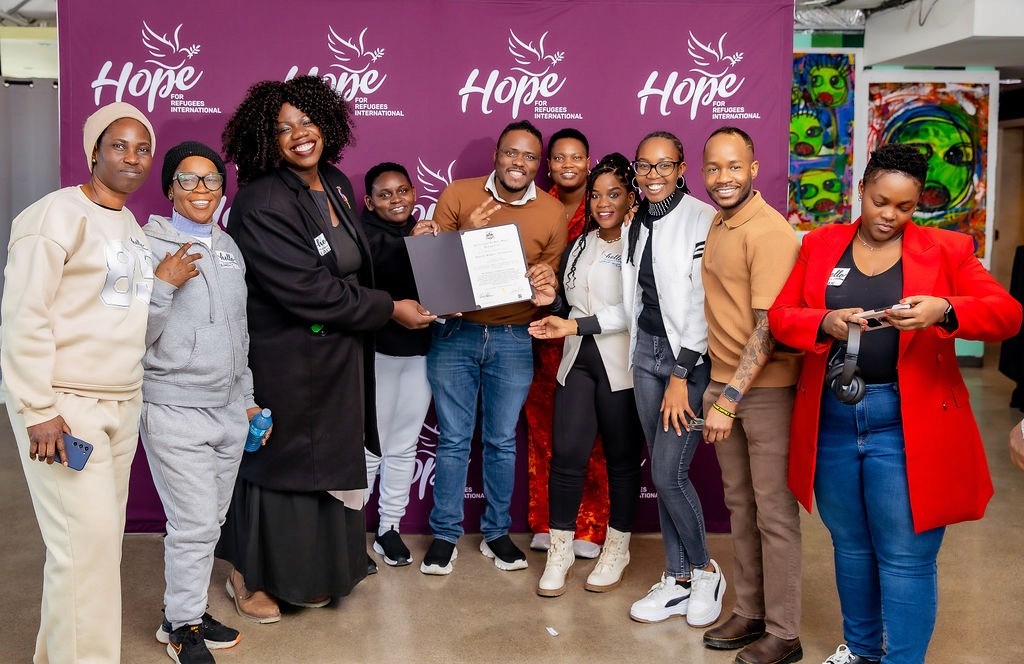
In the image above, Hope for Refugees International members and volunteers receive the certificate of Safe Space Designation from the Rainbow Community of Canada.
The Toolkit is not merely a guidance document. It is an institutional intervention. It will provide a structured community safety framework, trauma-informed engagement standards, leadership inclusion models, risk identification tools, and accountability mechanisms designed specifically for Pride networks and LGBTQI+ organizations.
The goal is simple but urgent: to ensure that belonging, safety, and leadership are not optional gestures, but embedded standards.
The Choice Ahead
Pride movements across Canada now face a choice.
Continue symbolic inclusion, or institutionalize shared power.
Continue reactive responses to harm, or implement preventative safety frameworks.
Continue inviting refugees to tell their stories, or build systems that enable them to lead.
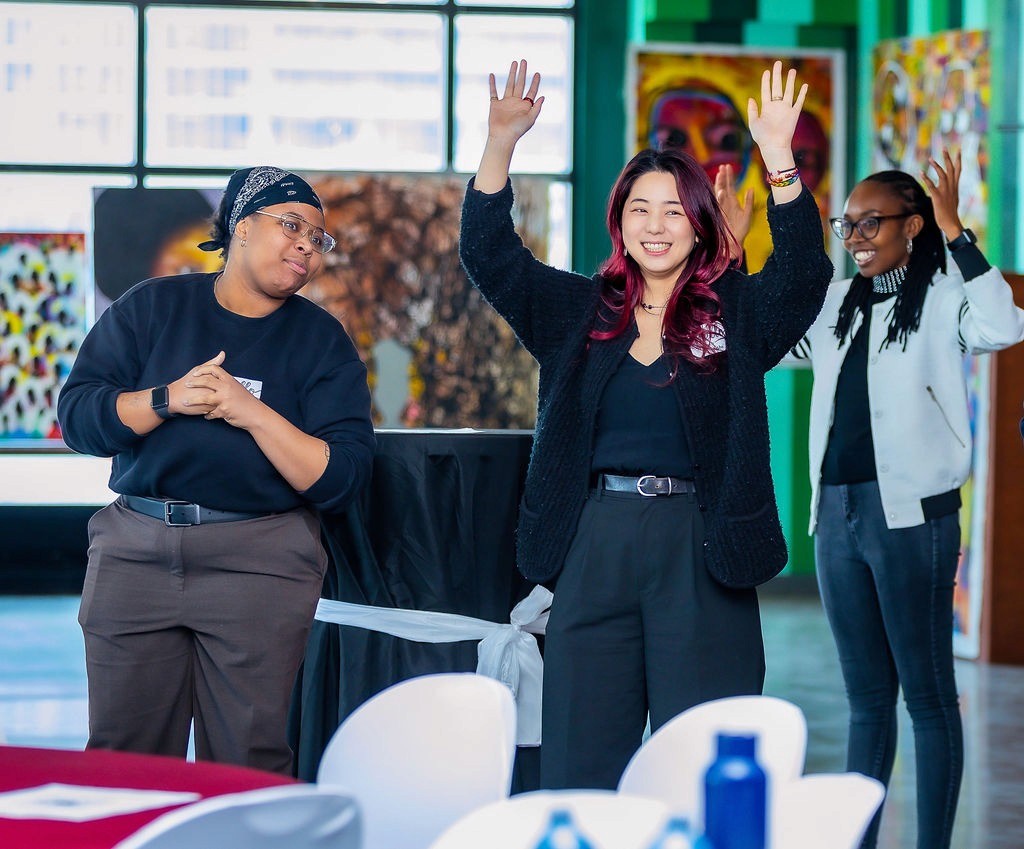
In the image above, participants enjoys a lite and fun entertainment moment during the symposium
The future of Pride will be shaped not only by how loudly it celebrates, but by how intentionally it structures safety and power.
Belonging is not a feeling alone. It is a framework.
Safety is not assumed. It is designed.
Inclusion is not declared. It is built.
And the time to build is now.